

Rigid supply chain plans worked for a long time because companies could plan in advance using historical data and make decisions with confidence.
Take Walmart, for example. Like many companies, they had a 52-week supply chain plan built in advance. It was based on past data, such as weather fluctuations, seasonal demand, and demographics. The plan worked most of the time.
However, the pandemic changed everything for the retail giant.
They were facing challenges such as:
Increasing capacity pressure in fulfillment centers.
Backlog of orders.
Unexpected demand for certain essential products.
Prioritizing products to be sent first from distribution centers.
With the right mix of technology and agile strategies, Walmart overcame these challenges and continued meeting customer expectations despite widespread lockdowns.
In a fast-paced, unpredictable world, companies must replace a rigid supply chain with a dynamic one.
However, to build such a nimble supply chain, companies need real-time data across all operations.
Unfortunately, most companies don’t have access to that level of visibility.
They have limited visibility into their supply chain due to factors such as:
Data silos: Information is restricted to specific departments or individuals, leading to fragmented insights and inaccurate decision-making.
Lack of system integration: When systems don’t work together, data cannot flow seamlessly. This causes delays in data sharing and slows decision-making.
Overreliance on legacy systems: Legacy systems are not designed for modern, fast-paced supply chains. This prevents seamless integration and data sharing and slows down the overall business.
Manual processes: Many supply chains still rely heavily on manual tasks, slowing data collection and processing and impacting decision-making.
Companies don’t need colorful dashboards full of historical data they need real-time, actionable insights to make fast, confident decisions.
How AI Helps Companies Drive Action
To pivot like Walmart, companies need real-time data. However, fragmented datasets and data silos make it difficult to plan effectively. By unifying data pipelines and using AI, companies can:
Forecast demand: By integrating internal and external data, such as sales and marketing, weather, and economic and geopolitical indicators, companies can produce more accurate demand forecasts. They can also make real-time adjustments to inventory and optimize stock levels in response to demand. This helps them avoid overstocking and stockouts, save on storage costs, and reduce waste.
Route optimization: A unified data pipeline gives decision-makers real-time visibility into traffic, weather, order priorities, and operational constraints—all in one interface. It allows companies to predict potential disruptions, identify at-risk shipments, and proactively reroute loads to ensure timely delivery. This enables logistics teams to make smarter decisions across the distribution network.
Dock scheduling: Companies can reduce truck wait times and congestion by automating and optimizing dock slot assignments using real-time data. This improves resource allocation and transportation planning. It also enables companies to predict disruptions and manage them proactively. By leveraging unified data and AI, companies can improve dock utilization, reduce transportation costs, and deliver products on time.
Predict equipment breakdowns: With unified data pipelines receiving real-time data from IoT sensors and machine logs, AI can efficiently monitor and analyze equipment health. Leveraging AI’s predictive capabilities, companies can detect anomalies and potential failures early, preventing breakdowns before they occur. This helps companies proactively schedule maintenance, extend equipment lifespans, and prevent operational disruptions.
Meet market demand: Customers expect fast, reliable deliveries. However, as seen in Walmart’s example, companies cannot always fulfill demand on time, especially when an unexpected event like the global pandemic occurs. With real-time data access and AI, companies can make faster decisions and meet customer demands efficiently. For example, they can adjust inventory levels, update dock schedules, or optimize routes in response to sudden changes. This helps companies meet customer expectations and build trust.
How CSCS Transforms the Supply Chain
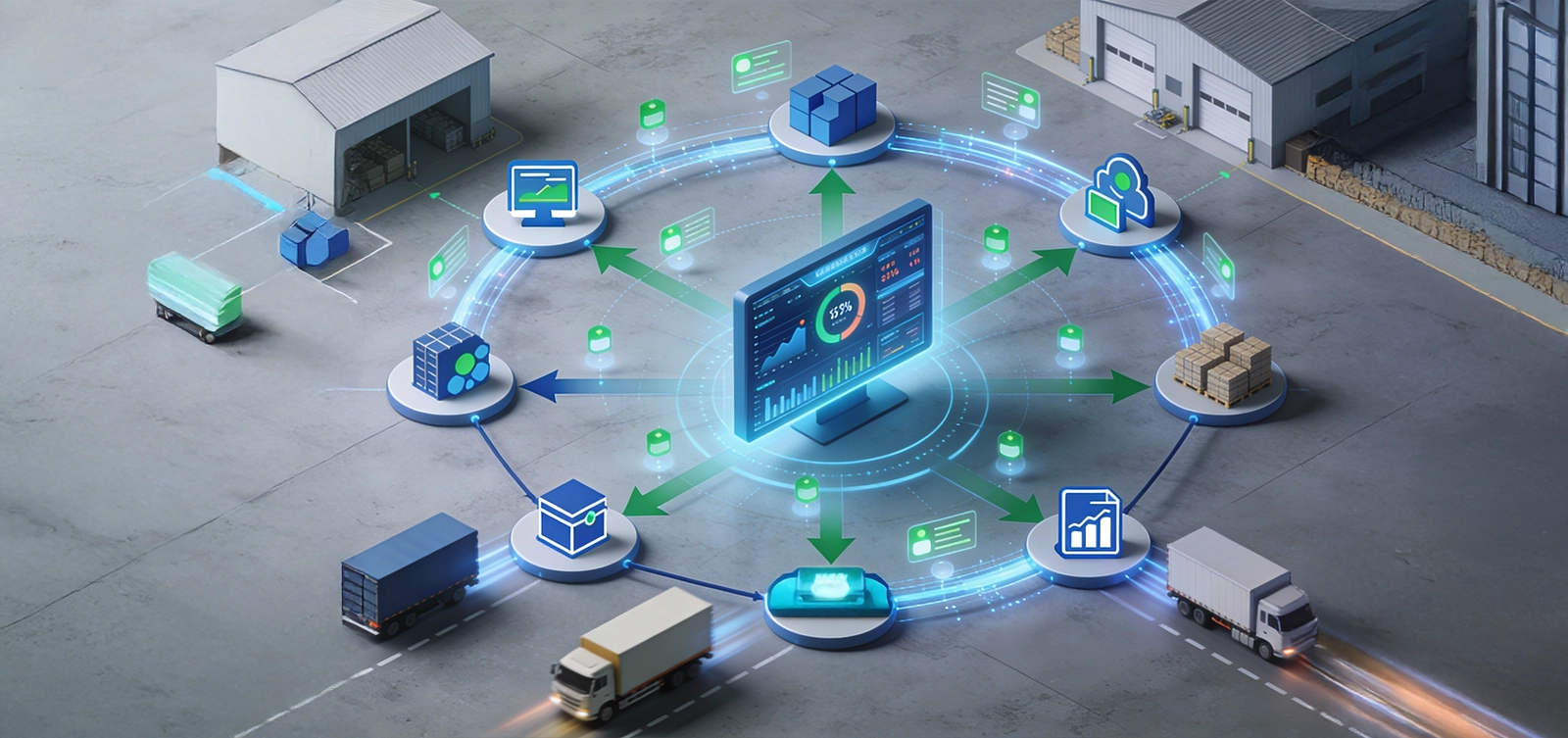
CSCS offers a next-gen AI-powered solution that integrates a company’s Transportation Management Systems (TMS), Warehouse Management Systems (WMS), Enterprise Resource Planning (ERP), partners, and IoT devices.
This integration enables companies to gather data from all sources in one place and gain real-time visibility across the entire supply chain. The platform can monitor factors such as temperature fluctuations, traffic jams, and live inventory status in real time, enabling decision-makers to make more accurate, faster decisions.
Using an AI-powered platform like CSCS helps companies achieve measurable outcomes such as:
Decrease in dock dwell time: Platforms like CSCS unify real-time data and provide end-to-end visibility across the supply chain. This enables companies to plan the product picking and loading process, align it with the dock schedule, and optimize routes to deliver products to the dock on time. This helps companies minimize dock idle time and ensure on-time delivery.
Improvement in On-Time, In-Full (OTIF): AI-powered platforms help companies fulfill orders on time by optimizing routes, automating workflows, and preventing disruptions using predictive alerts.
Cost savings: By optimizing routes and accurately predicting demand, AI-powered platforms can reduce waste and save costs.
Faster fulfillment rates: Automating picking, loading, and dock scheduling helps companies improve fulfillment speed and reliability.
Conclusion
Modern supply chain challenges require modern solutions. The days of relying on historical data, legacy systems, and manual processes are gone. Companies need real-time data to adapt to dynamic supply chain conditions. That’s why unified, real-time data is essential. With AI-powered platforms like CSCS, companies can integrate their existing systems and provide decision-makers with a unified, real-time view of the supply chain. This enables them to address disruptions proactively and fulfill orders on time.
Companies don’t need to overhaul their entire infrastructure. We recommend a 30-60-90-day approach that includes:
Understanding the challenges and selecting a process to transform for the pilot project
Reviewing existing data quality, system readiness, and resource capabilities before launching the pilot project
Defining and monitoring KPIs—such as dock dwell time and OTIF—to assess effectiveness
Scaling it to other processes once the pilot is successful
Establishing data governance and AI ethics frameworks to ensure AI reliability and effectiveness
Need help making your supply chain smarter and more dynamic? Contact us for more information.
Frequently Asked Questions (FAQ)
Q. Why are most supply chains ineffective?
Most companies rely on legacy systems and historical data to make supply chain decisions. This data doesn’t help in unpredictable circumstances, such as geopolitical conflicts or sudden weather disruptions, which can severely impact deliveries.
Q. How can unified data and AI help companies build real-time visibility?
By integrating existing systems—such as TMS and WMS—and using AI to analyze unified data, companies can gain real-time visibility across the supply chain. This helps them make immediate decisions, avoid bottlenecks, reduce wastage, and meet customer expectations.
Q. How to use AI in the supply chain?
Instead of overhauling the entire infrastructure, companies should take a 30-60-90-day approach to integrating TMS, WMS, and other systems with AI. This helps them transform without major disruptions and maintain business continuity.