

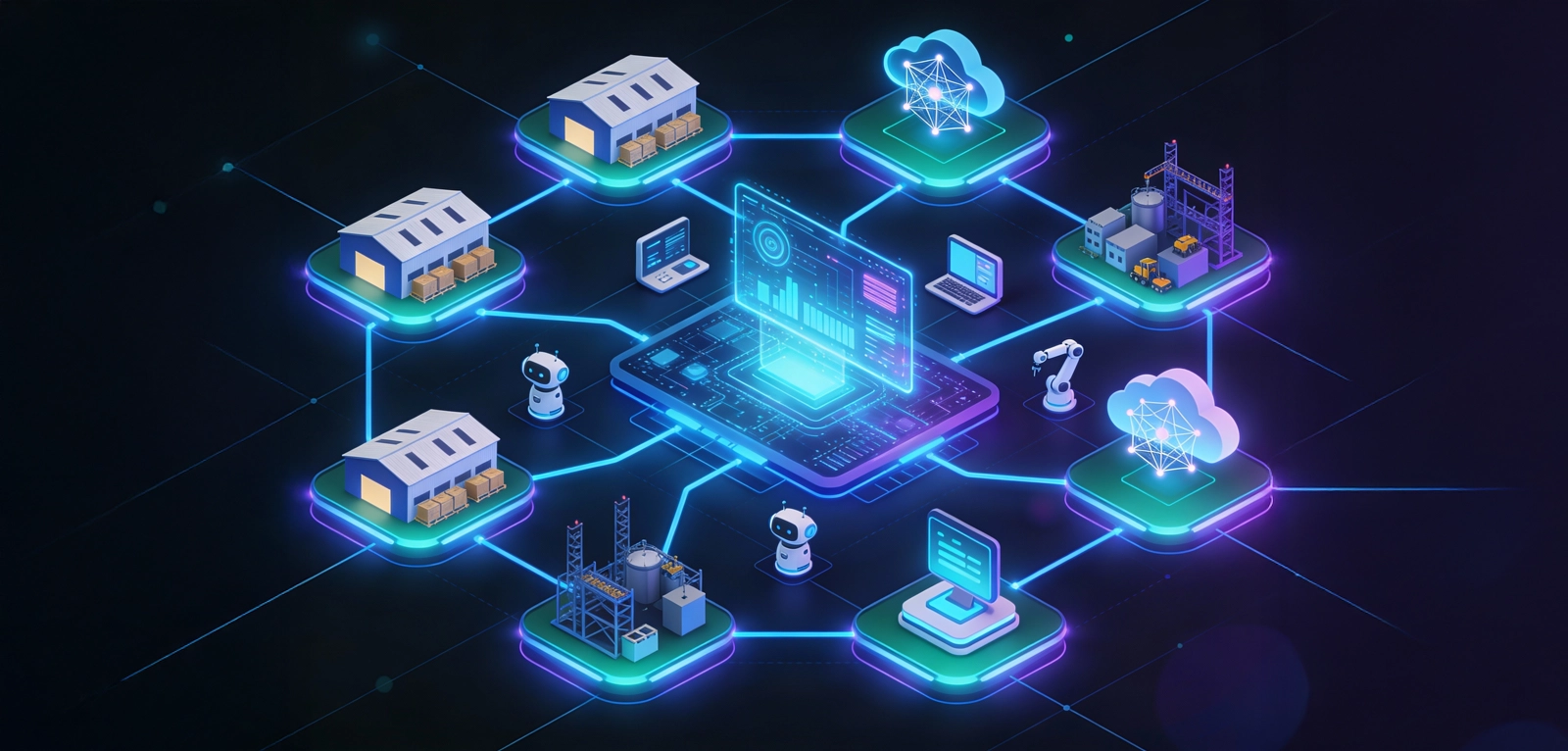
For decades, enterprises built powerful systems. But neglected the space between them.
In the early part of my career, I worked with companies that invested heavily in enterprise systems-best-in-class ERPs, WMS, OMS, TMS, and CRM platforms. Each served a purpose. Each solved a business problem.
But as I led global delivery programs across industries and continents, I saw a recurring pattern: these systems were not designed to talk to each other. Integration was considered “IT plumbing”.
It wasn’t just a technical gap. It was a strategic blind spot. And it costs businesses dearly.
The Evolution: From System-Centric to Experience-Centric
Twenty years ago, organizations could get by with batch data transfers, manual workarounds, and functional silos. The cost of delay or data inconsistency was tolerable. Customer expectations were simpler. Operational complexity was lower.
But today, that model doesn’t work. Everything, from order fulfillment and supply planning to customer service and partner onboarding must be real-time, connected, and intelligent.
I’ve witnessed companies struggling to meet modern expectations with legacy mindsets. And I’ve helped others transform by rethinking integration as a value creator, not just a connector.
Business Challenges I’ve Seen Repeatedly
Across retail, distribution, logistics, and manufacturing, the pain points are strikingly similar:
-
Disconnected ERPs and WMS leading to inaccurate inventory and missed SLAs
-
Manual data entry across platforms causing delays and errors
-
Siloed customer data creating fragmented experiences
-
Long integration timelines that delay digital initiatives by months
-
Over-reliance on developers for routine system changes
These are not just technical challenges. They create lost revenue and strained partner relationships.
At CSCS, we work with customers navigating this exact reality. They’re not just asking for integration anymore. They’re demanding intelligence, speed, and visibility across every flow.
Modern Integration: From Backend to Boardroom
The technology has matured. But more importantly, so has the mindset.
But the real shift is this: integration is now seen as a boardroom conversation, not just an engineering task.
Why? Because integration enables:
-
Faster launches for new products, partners, and experiences
-
Real-time business intelligence and operational agility
-
Automated workflows that remove manual friction
-
Resilience across the supply chain and tech ecosystem
I’ve seen firsthand how a well-integrated tech stack can reduce onboarding time by 60%, improve order accuracy, and unlock millions in working capital.
Final Thought: Treat Integration as Strategy, Not Infrastructure
We’re in a new era where agility, automation, and intelligence hinge on one thing: connected systems.
The companies winning today aren’t those with the best individual tools — they’re the ones that built the best connective tissue between them.
Integration may have been an afterthought in the past. Now, it’s the foundation.
About the Author:
Maharajan Karthigaivelayutham is the Chief Delivery Officer at CSCS, a global digital supply chain solutions firm, with 30 years of integration experience helping enterprises modernize operations through intelligent integration, visibility, and automation.

Blog by:
Maharajan Karthigaivelayutham (Maha)
Chief Delivery Officer, CSCS